How do you fix a hot water heater
Hot water is one of those things most people don’t think about — until it’s gone. When your water heater starts to fail, it usually gives you several warning signs before it stops working altogether. Knowing what to look for can help you avoid cold showers, water damage, and an unexpected emergency replacement.
1/11/20263 min read
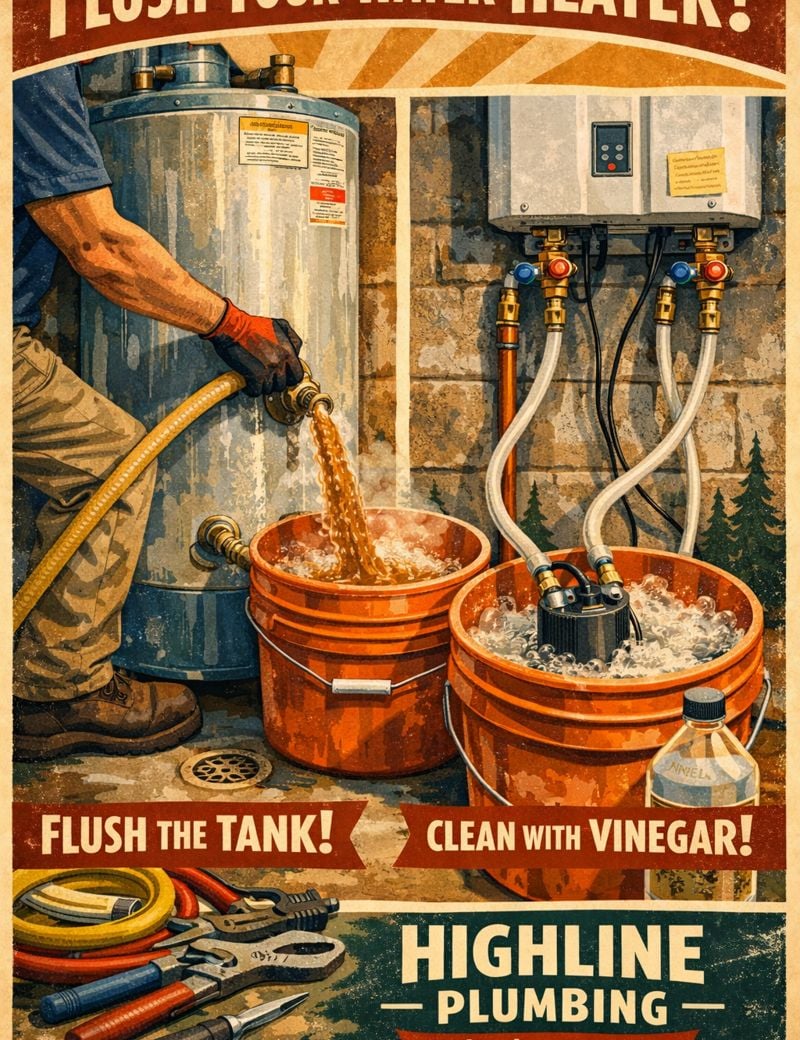
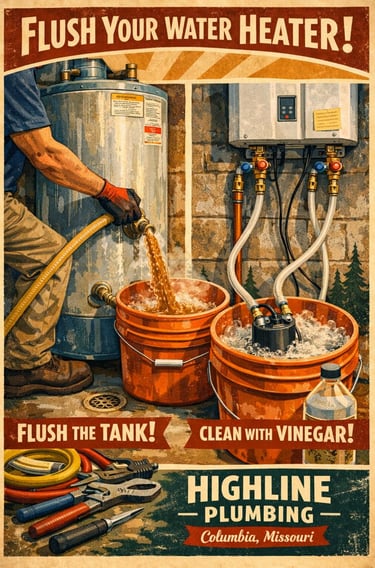
A typical water heaters last somewhere between 7 to 14 years. As they get older, mineral deposits from Columbia’s water supply slowly build up inside the tank. This buildup makes the unit work harder, reduces efficiency, and shortens the amount of hot water available. Sometimes a professional flush or repair can restore performance. Other times, replacing the unit is the smarter and more cost-effective option. At Highline Plumbing, we take the time to evaluate your system and explain what makes the most sense for your home or business.
Changes in how your hot water behaves are often the first clue that something isn’t right. If you’re running out of hot water quickly, hearing popping or banging noises, noticing rusty-colored water, or seeing moisture around the tank, your water heater is likely struggling. Even a small leak or a faulty valve can turn into a much larger problem if it’s ignored.
Tankless water heaters are designed to last longer and use energy more efficiently, but they still need regular service. Over time, mineral scale, corrosion, and heavy usage can reduce performance or cause components to fail. Our technicians are experienced with tankless systems and can diagnose issues quickly, whether the unit needs descaling, part replacement, or a system upgrade. Follow these simple steps below to do it yourself:
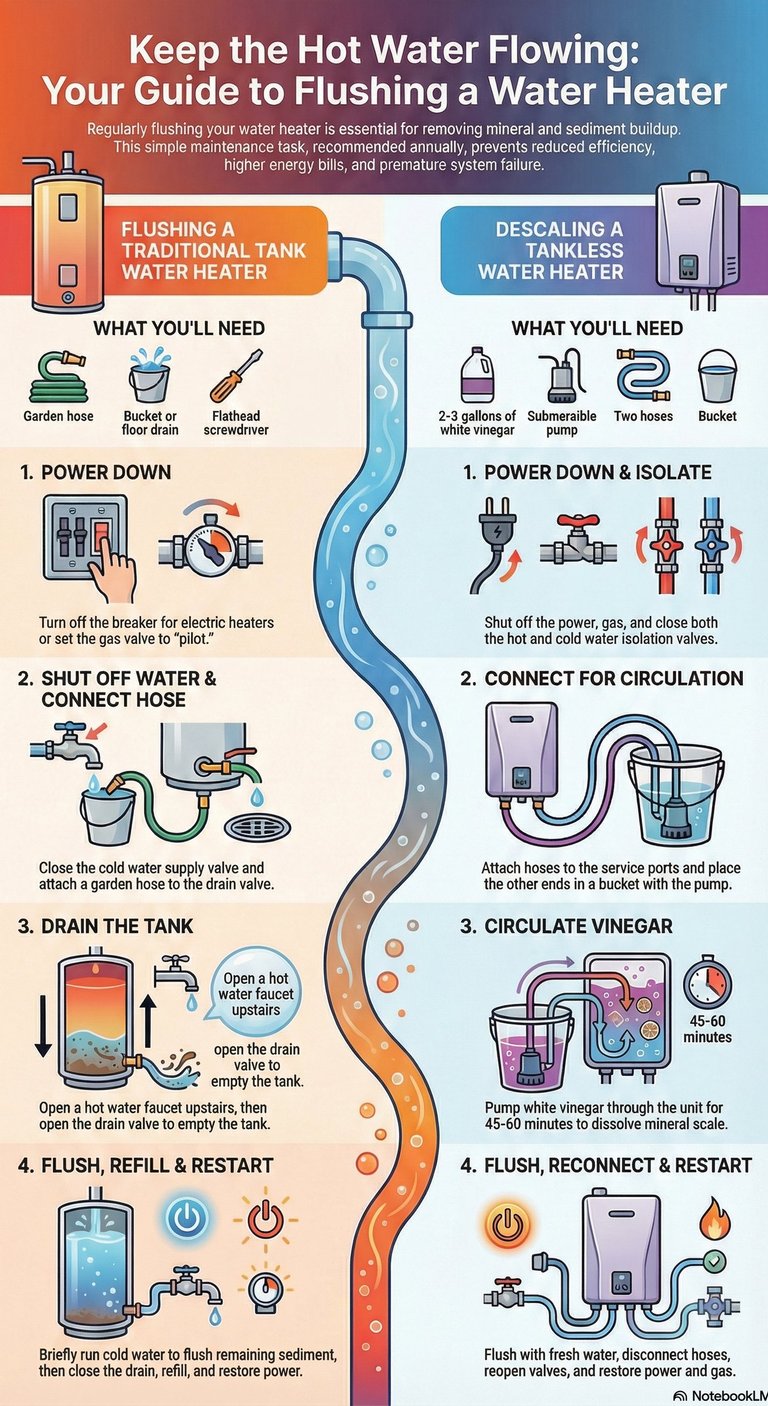
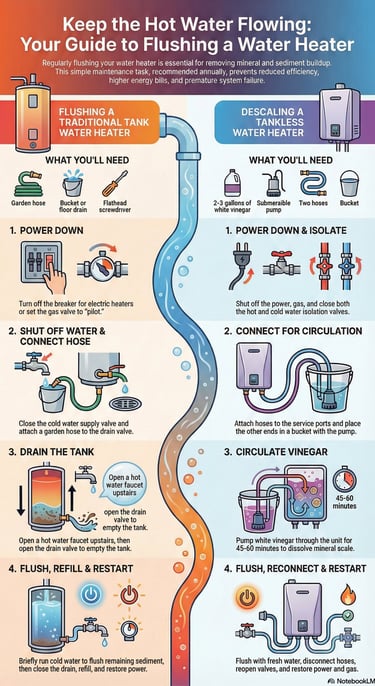
How to Flush a Tank Water Heater
Flushing a traditional tank-style water heater once a year helps remove sediment that builds up from Columbia’s mineral-rich water. This improves efficiency, extends the life of the heater, and restores hot water performance.
What you’ll need
Garden hose
Bucket or floor drain
Flathead screwdriver
Step-by-step
Turn off the power
Gas heaters: Set the gas valve to pilot
Electric heaters: Turn off the breaker
Turn off the cold water supply
Find the valve at the top of the tank and shut it off.Attach a garden hose
Connect the hose to the drain valve near the bottom of the tank. Run the other end to a floor drain or outside.Open a hot water faucet
This prevents vacuum lock and allows the tank to drain properly.Open the drain valve
Let the tank empty completely. If the water comes out cloudy or gritty, that’s sediment being flushed out.Flush with fresh water
Turn the cold water back on briefly while the drain valve is still open. This stirs up and removes remaining sediment.Close the drain and refill
Once the water runs clear, close the drain valve, remove the hose, and turn the cold water back on. Leave a hot faucet open until air is fully purged from the system.Restore power
Once the tank is full, turn the gas or electric back on.
How to Flush a Tankless Water Heater with White Vinegar
Tankless water heaters need regular descaling to prevent mineral buildup from clogging the heat exchanger. Most manufacturers recommend doing this once per year.
What you’ll need
2 to 3 gallons of white vinegar
Submersible pump
Two washing-machine hoses
Bucket
Step-by-step
Turn off the heater
Shut off the power and gas supply.Close the water valves
Turn off the cold and hot isolation valves on the unit.Connect hoses
Attach hoses to the service ports on the heater and place the other ends into a bucket.Add vinegar
Pour white vinegar into the bucket and place the pump inside.Circulate the vinegar
Turn on the pump and let the vinegar circulate through the heater for 45–60 minutes. This dissolves scale and mineral buildup.Flush with fresh water
Turn off the pump, drain the vinegar, and open the cold water valve briefly to rinse out the system.Disconnect and restore
Remove the hoses, close the service ports, reopen the hot and cold valves, and restore power and gas.
Why Flushing Matters
Sediment buildup is one of the top causes of:
Reduced hot water
Loud popping noises
Higher energy bills
Shortened water heater lifespan
At Highline Plumbing, we flush both tank and tankless water heaters as part of professional maintenance and can spot early signs of wear before they become expensive failures.
If you’d rather not tackle it yourself, our licensed Columbia plumbers can handle it quickly, safely, and correctly.
Highline Plumbing provides complete water heater repair, maintenance, and installation services in Columbia, Missouri. From traditional tank systems to high-efficiency tankless and heat pump units, we help you choose the right solution for your needs — and we stand behind our work with honest advice and dependable service.
Listen to a podcast overview if you'd like by clicking here: